This article was originally published on 9/20/2023 and updated on 10/8/2026
RFID is the broader term for radio frequency identification technology. RAIN RFID is a specific type of passive UHF RFID used for many item-level, inventory, logistics, and asset tracking applications.
For converters, the distinction matters because the inlay, frequency, encoding requirements, and finished construction should match the customer’s application. A label, tag, or ticket intended for one RFID environment may not be appropriate for another without confirming the required inlay and data specifications.
What Is RFID?
RFID uses radio waves to identify and exchange data between a tag and a reader. The RFID tag or label carries an inlay, and the reader captures information from it. Software or a host system then connects the read to inventory, asset tracking, shipment verification, authentication, access control, or another workflow.
RFID includes multiple frequencies and formats. RFID systems may use low-frequency, high-frequency, NFC/HF, ultra-high-frequency, passive tags, or active tags, depending on the application. The correct label or tag construction depends on how the product will be read and where it will be used.
What Is RAIN RFID?
RAIN RFID refers to passive UHF RFID technology that uses the ISO/IEC 18000-63 air-interface protocol, also known as GS1 UHF Gen2. RAIN RFID is commonly used for item-level identification, inventory, logistics, and asset tracking applications.
Applications may include retail item-level tagging, warehouse inventory, logistics, asset tracking, supply chain verification, and product authentication.
The Main Difference Between RFID and RAIN RFID
RFID is the general category. RAIN RFID is a specific passive UHF RFID technology within that category. This distinction helps clarify which inlay, reader environment, frequency range, and encoding requirements apply to the finished product.
A customer requesting RAIN RFID usually refers to passive UHF RFID products that comply with the applicable GS1 UHF Gen2 or ISO/IEC 18000-63 standards. A customer requesting RFID may need more clarification about frequency, inlay type, memory, encoding, and read environment.
What This Means for RFID Labels, Tags, and Tickets
The finished RFID product must match the system in which it will be used. A RAIN RFID label for item-level retail may have different inlay and data requirements than those of an NFC/HF ticket, a file-tracking label, or a specialty asset tag.
For converters, the job details drive the production workflow. Important requirements include inlay type, material, print registration, lane count, finished size, roll format, encoding requirements, and whether labels or tags must be tested before delivery.
Inline RFID Insertion for RFID and RAIN RFID Products
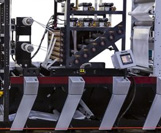
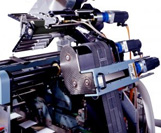
Inline RFID insertion is used when inlay placement runs as part of a flexo or digital press workflow. The Tamarack MVW Inline RFID Inlay Insertion Equipment produces RFID labels, tickets, and tags in a single pass on a new or existing flexo/digital press.
The equipment is typically installed after the press print stations and before the finishing section. It is servo-driven and designed for dry inlay insertion, with wet inlay insertion also available.
Offline RFID Insertion and Encoding
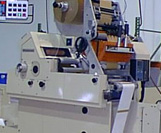
Offline RFID insertion is used when the printed web is brought to a separate platform for inlay placement. The Tamarack MVW Offline RFID Inlay Insertion Equipment inserts RFID inlays into blank or pre-printed webs and includes re-registration to place the inlay in register with the print.
For applications that require encoded data, the Tamarack EZ RFID Encode supports encoding, testing, and locking if required. Labels that do not pass the testing protocol can be marked, and the roll can be slit and rewound when configured for multi-lane production. EZ RFID Encode can be equipped for UHF and HF/NFC and can also include variable data printing.
RFID and RAIN RFID Equipment for Converters
RFID and RAIN RFID production should be configured around the customer’s inlay, data, material, and finishing requirements. Tamarack® Products works with converters to develop custom web converting equipment, including inline, offline, and encoding equipment for RFID labels, tags, and tickets. The equipment can also be customized around product construction, substrate, line layout, and workflow demands.
Tamarack® Products engineers RFID insertion and encoding equipment for converters producing RFID and RAIN RFID labels, tags, and tickets. Tamarack provides inline, offline, encoding, and custom equipment solutions designed to support accurate inlay placement, controlled web handling, and flexible production workflows. Contact Tamarack today to discuss RFID equipment for your label, tag, or ticket production requirements.