This article was published on 4/27/2023 and updated on 8/25/2026
RFID label insertion supports inventory management by making RFID-enabled labels, tags, and tickets available for products, assets, shipments, files, apparel, and other tracked items. The RFID inlay inside the label or tag allows the item to be identified by an RFID reader.
For converters, RFID label production depends on accurate inlay placement, consistent registration, controlled web handling, and the right finished format. The label or tag also needs to match the customer’s inventory system, application environment, and data requirements.
What Is RFID Label Insertion?
RFID label insertion is the process of placing an RFID inlay into a label, tag, or ticket during construction. The inlay contains the antenna and chip that allow the finished product to communicate with an RFID reader.
RFID labels may be used on cartons, pallets, apparel, files, tools, equipment, pharmaceutical products, luggage, and other inventory items. RFID tags and tickets may be used for apparel, transportation, events, ski-lift access, or other applications that require identification and tracking.
The production method depends on the material, print layout, inlay type, repeat size, lane count, and finished delivery format. Some labels may also require encoding and testing before the finished roll is delivered.
How RFID Labels Support Inventory Management
RFID labels help inventory systems identify tagged items without the direct line-of-sight scanning required by barcodes. This can be useful when products are packed in cases, moving through a warehouse, staged for shipment, or counted in groups.
Inventory applications may use RFID labels or tags to support:
- Product identification
- Case and pallet tracking
- Warehouse inventory counts
- Apparel item-level tagging
- File and document tracking
- Tool and equipment tracking
- Luggage and logistics tracking
- Pharmaceutical and nutraceutical labeling
The RFID label is only one part of the inventory system. Readers, antennas, software, database structure, label placement, and the operating environment all affect how the system performs.
Producing RFID Labels for Inventory Applications
Converters producing RFID labels for inventory applications need equipment that places the inlay in the correct location and keeps the web moving consistently through production. Finishing may include die cutting, slitting, rewinding, or roll-to-tag/ticket production, depending on the job.
Production details can vary from one application to another. A logistics label may have different material, inlay, adhesive, and encoding requirements than an apparel tag or file tracking label. A multi-lane RFID job may also require different finishing and rewinding than a short-run test or trial.
Workflow determines the equipment configuration. Inline RFID insertion, offline RFID insertion, and secondary encoding each support a different production approach.
Inline RFID Label Insertion
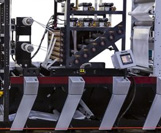
Inline RFID insertion is used when inlay placement runs as part of a flexo or digital press workflow. The Tamarack MVW Inline RFID Inlay Insertion Equipment produces RFID labels, tickets, and tags in a single pass on a new or existing flexo or digital press.
The equipment is typically installed after the press print stations and before the finishing section. This allows printing, RFID inlay insertion, and finishing to remain on a single connected line, depending on the press and equipment configuration.
Tamarack’s MVW Inline RFID equipment is servo-driven and designed for wet and dry inlay insertion. Operator-friendly controls, fast setup, and a simple web path support short-run jobs, trials, and high-volume production work.
Offline RFID Label Insertion
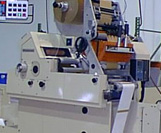
Offline RFID insertion is used when RFID inlay placement is handled separately from the press line. The Tamarack MVW Offline RFID Inlay Insertion Equipment inserts RFID inlays into blank or pre-printed webs and includes re-registration to help place the inlay in register with the print.
The offline platform can be configured for wet inlays, dry inlays, or both. It also supports multiple lanes for higher-volume production. Options include reader, marker, and encoder integration, multiple die-cut units in the finishing section, and roll-to-roll or roll-to-tag/ticket production.
This workflow can fit converters that print on separate equipment, manage multiple SKUs, or need dedicated RFID insertion time outside the press schedule.
Encoding and Testing RFID Inventory Labels
Some RFID inventory labels need encoded data before delivery. Encoding writes the required information to the inlay so the finished RFID label, tag, or ticket can identify the correct item when read.
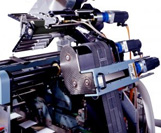
The Tamarack EZ RFID Encode supports encoding, testing, and locking if required. Labels that do not pass the testing protocol can be marked through communication with the reader/encoder and inkjet system. Additionally, variable data printing can be added to print a bar code with matching data to what is encoded in the chip. Finally, the label roll can then be slit, if multi-lane, and rewound into finished RFID-enabled labels.
EZ RFID Encode can be equipped for UHF and HF/NFC, with multi-lane configurations available.
RFID Label Insertion Equipment for Inventory Applications
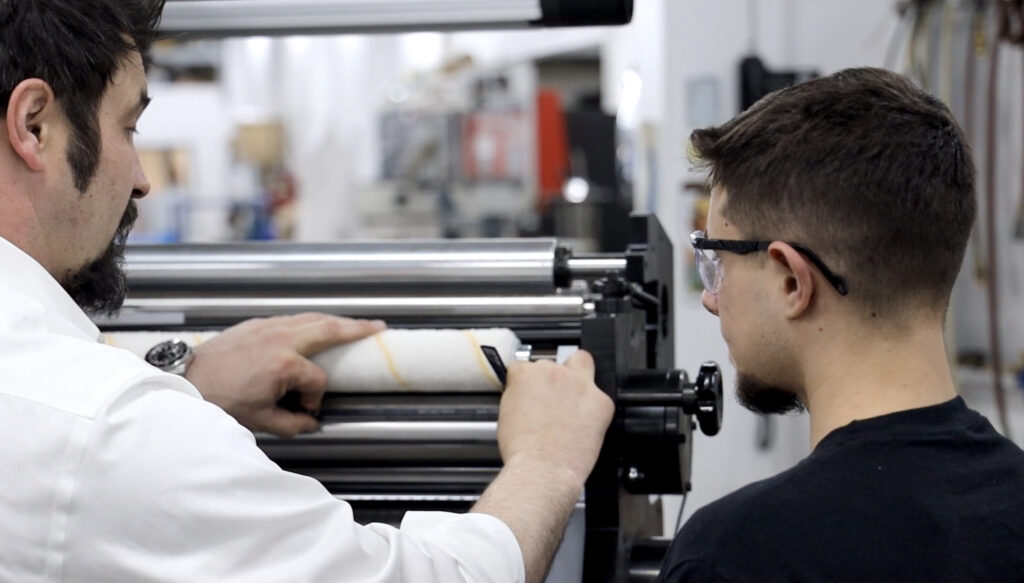
RFID inventory labels need to fit the product, substrate, inlay, data requirements, and production workflow. Tamarack Products works with converters to configure RFID insertion and encoding equipment for inline press production, offline inlay insertion, and secondary encoding and verification. Tamarack also provides custom web finishing equipment for applications that require equipment customized around the product, substrate, line layout, or workflow demands.
Tamarack® Products engineers RFID insertion and encoding equipment for converters producing RFID labels, tags, and tickets. Tamarack provides inline, offline, encoding, and custom equipment solutions designed to support accurate inlay placement, controlled web handling, and flexible production workflows. Contact Tamarack today to discuss RFID label insertion equipment for your inventory management applications.