How RFID Solutions for Automotive OEMS Improve Processes
Automotive manufacturers must maintain effective, efficient operations with precision, speed, and traceability. OEMs and Tier suppliers navigate just-in-time production models and increasingly complex global supply chains.
RFID (Radio Frequency Identification) technology provides a key advantage. By automating identification, location, and verification tasks, RFID solutions in automotive processes eliminate manual logging errors, reduce downtime, and ensure every tool and part is accounted for without the need for manual scanning that was previously required with bar code-based inventory systems.
Compliance with quality and regulatory standards is imperative in high-volume, fast-paced automotive environments. RFID technology enhances operational transparency by tracking tool location, inspections, installations, and usage. These comprehensive insights streamline processes, strengthen accountability, and facilitate well-informed, data-driven decisions across the entire production line.
RFID Tool Management in Automotive Plants
Automotive facilities need to track, maintain, and precisely deploy thousands of specialized tools, ranging from calibration devices and torque wrenches to highly regulated torque tools. Implementing RFID technology offers real-time visibility and control, streamlining this critical process.
- Automated Tool Check-in/Check-out: Workers can quickly assign or return tools using RFID scans, reducing search time and ensuring tools are always where they are supposed to be.
- Usage Validation: RFID tags linked to both the tool and operator enable manufacturers to validate that only calibrated and approved tools are used for specific tasks.
- Preventative Maintenance Scheduling: Tag data can log total usage time or cycles, automatically alerting technicians when recalibration or service is due.
- Loss Prevention and Theft Deterrence: Facilities gain full traceability of every asset, helping prevent tool misplacement or unauthorized removal from controlled zones.
These capabilities result in less downtime, fewer quality issues due to uncalibrated tools, and improved worker productivity.
Tracing Defects and Ensuring Compliance with RFID
When a defect occurs, whether during assembly, testing, or in-field performance, RFID enables precise traceability, accelerating containment and reducing risk exposure.
- Root-Cause Analysis: RFID data can quickly identify which operator assembled the part, which lot of components were used, and which tools were involved.
- Recall Readiness: In the event of a recall, manufacturers can isolate affected parts by serial number, production line, or shift, thereby minimizing disruption and associated costs.
- Supplier Accountability: RFID provides transparency into supplier components that may contribute to downstream defects, enabling the enforcement of quality requirements and the validation of claims.
- Regulatory Compliance: RFID logs provide permanent, tamper-resistant records that support audits and compliance with automotive industry standards and customer-specific requirements.
By enabling end-to-end traceability, RFID transforms quality assurance from a reactive process into a proactive, strategic asset.
Assembly Verification and Line Control
Ensuring that all critical components are in the right place at the right time to meet the demands of the fast-paced automotive industry is vital. RFID solutions in automotive operations improve efficiency by enabling real-time part location tracking, line sequencing, and validation.
- Error-Proofing (Poka-Yoke): RFID readers at workstations confirm the part’s identity and installation location, helping prevent assembly errors before they occur.
- Sequence Verification: In just-in-sequence (JIS) operations, RFID ensures that each part arrives in the correct build order, minimizing line disruptions.
- Operator and Equipment Authorization: RFID badges can validate operator credentials or confirm that specific equipment is configured correctly before proceeding.
- System Interlocks: Assembly lines can be programmed to halt or trigger alerts if a tag is missing, misread, or out of sequence, thereby eliminating the need for manual checks.
These functions reduce costly rework and ensure consistent product quality as automotive lines get more complex.
Selecting RFID Tags for Harsh Automotive Environments
Tag selection is one of the most critical steps in designing a successful RFID solution for automotive production. Manufacturing environments may pose technical challenges, such as exposure to dust, temperature fluctuations, or metal interference, which require durable RFID tags or tickets.
Key tag considerations include:
- On-Metal Tag Design: Tags must be designed or shielded to prevent signal distortion when attached to metal surfaces, such as chassis, tools, or racks.
- Durability: Tags should withstand heat, oil, water, vibration, and physical impact, depending on the application point, especially in areas such as tools, engine bays, or paint shops.
- Attachment Method: Permanent tags (weld-on, riveted) may be required for traceability; removable options (adhesive, zip tie) are suitable for reusable racks or maintenance tools.
- Read Range and Memory: Larger assets may require longer read distances; compliance-related tags may need expanded memory for logging certifications or process steps.
Sourcing the proper industrial-grade RFID tags helps ensure long-term reliability across multiple lifecycle stages.
RFID Reader Placement and Integration Strategies
RFID readers must be strategically placed to capture essential data without interfering with throughput or production line ergonomics. Proper planning ensures accurate reads, seamless integration, and minimal disruption.
- Fixed Readers at Chokepoints: Install at tool rooms, inspection zones, or workstation entry/exit points where natural pauses occur.
- Mobile Readers: Utilize handheld devices for audits, maintenance checks, or tool inventory, particularly in facilities where tools are frequently relocated.
- Embedded Line Readers: For full automation, readers can be integrated into PLCs or MES systems to trigger actions like part acceptance or line progression.
- Network and Software Integration: Readers must feed structured data into ERP, MES, or QMS platforms for real-time insights and reporting.
Planning for tag-reader alignment, signal clarity, and data normalization upfront will reduce troubleshooting later and help unlock immediate ROI.
RFID Provides a Foundation for Automotive Quality Control
Automotive production relies on efficient, streamlined, and repeatable operations at every stage of the process. RFID strengthens that foundation by providing manufacturers with real-time visibility into tools, components, and processes, reducing errors before they occur and ensuring every product meets exact specifications. From tool traceability to real-time inventory control, RFID systems connect the data that keeps assembly lines compliant, efficient, and audit-ready.
As vehicle programs expand and production cycles become tighter, the role of RFID solutions in automotive manufacturing will only deepen. Plants that invest in RFID solutions for automotive manufacturing applications gain measurable advantages in uptime, operator accountability, and inventory management. By integrating RFID into tool tracking, inspection workflows, and part serialization, manufacturers position themselves for smarter, data-driven operations that meet both regulatory and customer expectations.
RFID Inlay Insertion Equipment for Automotive Applications
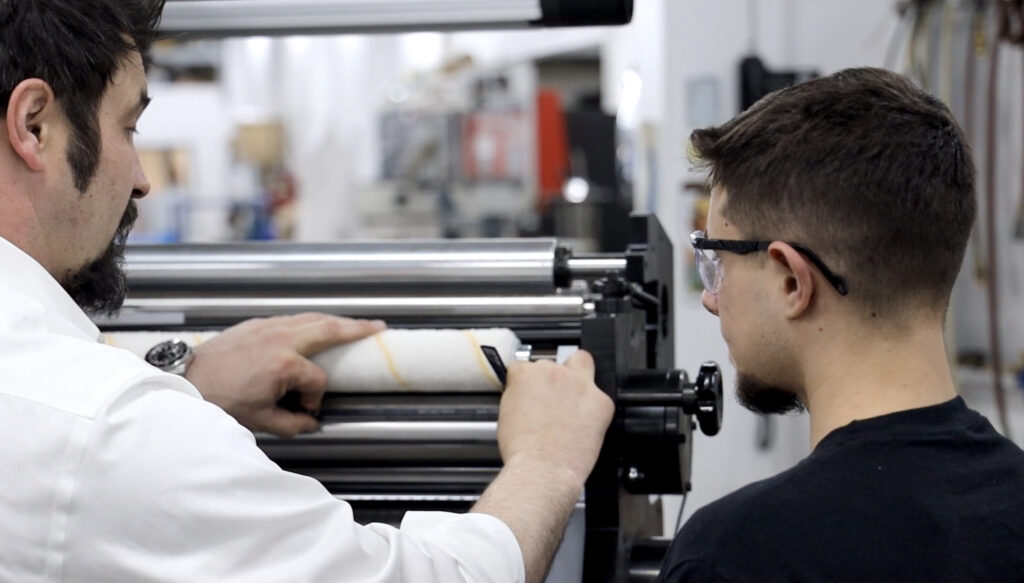
Automotive manufacturers rely on dependable tools and equipment in all processes, including RFID inventory management. The accuracy of RFID inlay placement and the consistency of read performance directly influence traceability and compliance throughout the manufacturing process. Tamarack® Products designs two advanced RFID inlay insertion systems that support high-speed, high-accuracy RFID tag and label production.
Tamarack® Inline RFID Insertion Equipment
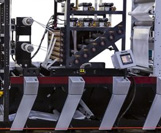
The Tamarack® Inline RFID Insertion Equipment integrates directly into flexographic presses, enabling continuous and high-volume RFID label and tag production. Servo-controlled insertion ensures precise accuracy and single-pass efficiency, maintaining accurate registration at high speeds. This system is ideal for automotive converters that produce serialized or encoded labels for parts, assemblies, or quality checkpoints, where throughput and accuracy are critical.
Tamarack MVW Offline RFID Inlay Insertion Equipment
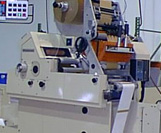
The Tamarack MVW Offline RFID Inlay Insertion Equipment is designed to insert RFID inlays into a preprinted or blank web and can be configured to handle dry or wet inlays. Want an easy-to-use, user-friendly interface? The MVW delivers, and with Tamarack’s custom design and engineering, your RFID tag production is configured to meet your exact requirements. Enjoy the same high-quality and precision with multiple lanes available for high-volume production.
Tamarack’s MVW Offline RFID Inlay Insertion equipment creates durable tags and/or tickets well-suited for automotive applications, such as tool-tracking labels, subassembly serialization, and real-time inventory tracking.
Both systems enable converters to deliver consistent tag performance, reduce waste, and ensure that every RFID label meets the read reliability and quality standards required by automotive OEMs and Tier suppliers.
Tamarack® Products engineers high-performance RFID inlay insertion equipment for precision-driven production environments. We provide inline and offline solutions designed for smart label, tag, and ticket manufacturing. Contact us today to explore RFID solutions for automotive operations.