An efficient RFID inlay inserting line is essential for converters striving to meet the rising demand for RFID-enabled labels and tags. As production volumes increase and tolerance requirements become tighter, achieving precise inlay placement, stable web control, and high throughput becomes increasingly critical. The goal is not only to insert inlays quickly, but also to ensure each label/tag performs reliably once it has been converted into a finished product.
Designing a high-throughput insertion line requires more than selecting a single piece of machinery; it involves considering the entire system. It requires building a coordinated process—linking mechanical modules, sensors, and quality-control checkpoints into a synchronized system. Whether developing a pilot setup or scaling for full production, understanding each element of the process helps converters strike a balance between performance, cost, and flexibility.
Inline vs. Offline Insertion: Selecting a Suitable Configuration
When designing an RFID inlay inserting line, one consideration is whether to use inline or offline insertion.
Inline insertion integrates directly into a press or converting system, enabling printing, lamination, and inlay placement to occur in a single continuous pass. This method offers exceptional efficiency and registration accuracy, making it well-suited for high-volume production with consistent formats. Inline configurations minimize handling and reduce waste associated with multiple passes.
Offline insertion operates as more of a modular, stand-alone process. It gives converters more flexibility for printing press selection, material changes, test runs, or specialty label formats. Offline systems are often used for shorter runs, R&D applications, or mixed-SKU production, where quick setup and versatility are essential considerations, although perform just as well for high volume RFID inlay production.
Both configurations have their place in RFID converting. Inline systems excel at throughput and automation; offline systems offer adaptability and flexibility as to which press is used for the printing. Many converters begin with offline equipment to allow complete flexibility before installing inline systems as volume and standardization increase.
Core Modules of an RFID Inlay Inserting Line
An effective RFID inlay inserting line combines precision mechanics, responsive controls, and consistent material handling. While designs vary, most production lines include several fundamental modules working in sequence:
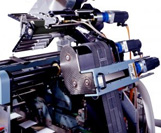
- Inlay Insertion Module – Places RFID inlays accurately onto or between web layers using servo-controlled placement. Tight alignment tolerance ensures consistent antenna positioning and optimal label/tag performance.
- Web Registration and Tension Control – Maintains uniform web movement and precise synchronization across rollers. Closed-loop feedback prevents web stretch, skew, or drift that can cause placement errors..
- Die-Cutting and Slitting Modules – Cut/perforate finished labels or tags, maintaining registration between printed graphics and embedded inlays. Accurate die alignment ensures that the inlay sits correctly within the final label/tag dimensions.
- Inspection Module and Quality-Control Systems – RFID reader system assures that the inlay is responsive and non-reads are marked. Options for encoding the chip and adding variable data printing are available.
- Rewind and Packaging – Finished rolls are wound, inspected, and prepared for downstream application.
Each module contributes to the overall accuracy and reliability of the system, with synchronization between drives and sensors being the foundation of a stable, high-throughput line.
Choosing the Right RFID Inlay Insertion Equipment Partner
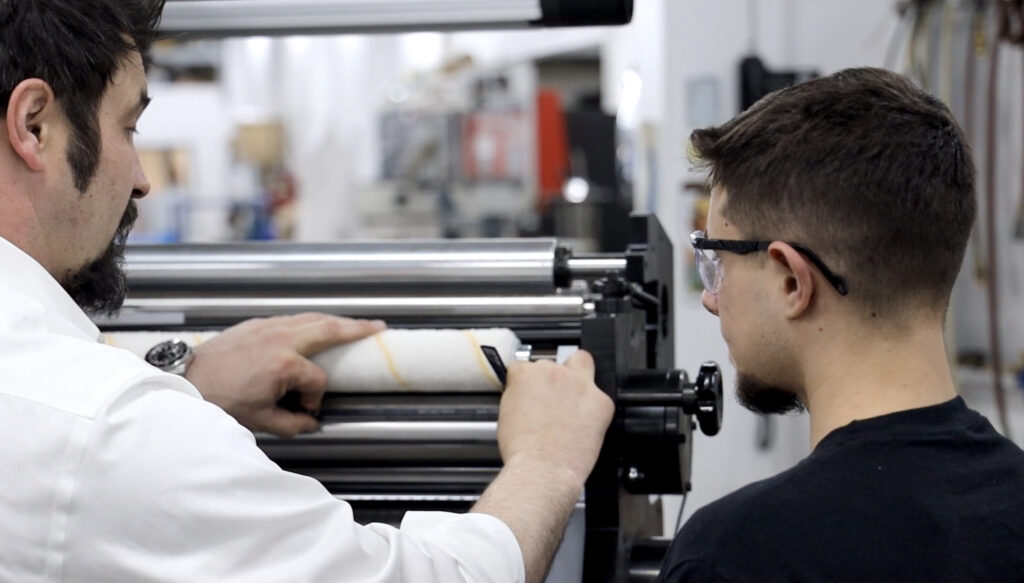
Every production environment has unique requirements, including volume, format range, materials, and automation level. Selecting equipment designed for precision, consistency, and easy integration is crucial for achieving long-term success. Converters should look for systems that combine tight registration control, stable web tension, and modular design to support future expansion.
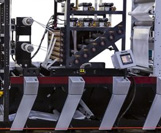
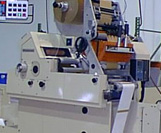
Tamarack Products® engineers RFID inlay insertion systems that meet these criteria. The Tamarack® Inline RFID Insertion Equipment delivers servo-driven placement accuracy and continuous, high-speed operation for converters seeking single-pass efficiency. The Tamarack® MVW Offline RFID Inlay Insertion Equipment provides printing flexibility and precise registration with user friendly interface and multi-lane, high-volume options.
Both platforms integrate with existing converting and finishing lines, giving manufacturers the performance, control, and adaptability required for high-quality RFID tag and label production.
Tamarack Products engineers high-performance RFID inlay insertion equipment for precision-driven production environments. We provide inline and offline solutions designed for smart label, tag, and ticket manufacturing. Contact us today to explore RFID solutions for your RFID inlay inserting line.