This article was previously published on 8/3/2022 and updated on 7/30/2026
RFID track-and-trace requirements are increasingly set by major retailers, government agencies, and global supply chain standards. The goal is clearer visibility, better accuracy, and tighter control over how products move from manufacturing to the shelf. What started as a way to improve internal inventory has expanded into a broader expectation across supply chains, with many suppliers now required to apply RFID tags at the item level before shipment.
In retail, these requirements continue to grow. Large organizations use RFID to support real-time inventory visibility and omnichannel operations, with item-level tracking becoming standard across many product categories. RFID is also tied to compliance frameworks and logistics programs that rely on consistent, automated data capture.
The push comes from the need to track products accurately, reduce manual handling, and maintain control across more complex supply chains. For suppliers and manufacturers, the implication is straightforward. RFID is now part of doing business in many distribution networks, not just a tool for internal efficiency.
Retailers Driving RFID Adoption
Large retailers have been the most visible drivers of RFID mandates that require suppliers to have proper RFID capabilities to become an approved supplier. An RFID mandate is a retailer requirement that products be tagged for automated tracking and inventory management in order to enter the retail supply chain.
Companies like Walmart, Target, Macy’s, and Nordstrom have expanded these requirements across multiple product categories with pilots into broader general merchandise. Walmart, for example, has continued to expand its RFID program across a wide range of departments. Suppliers are expected to comply to sell through their stores and distribution network.
Retailers are pushing RFID to improve inventory accuracy, reduce out-of-stocks, and keep store and online inventory in sync. With RFID, they can automate product identification and see inventory levels in near real time, which supports omnichannel operations.
Government and Defense Requirements
Government agencies and defense organizations have also implemented RFID requirements, particularly for logistics and asset tracking. The U.S. Department of Defense (DoD) has implemented RFID requirements within its supply chain that require suppliers, under certain contracts, to apply passive RFID tags to cases and palletized loads for shipment tracking and visibility.
These requirements are part of broader track-and-trace initiatives designed to:
- Improve logistics visibility
- Ensure accurate shipment verification
- Support operational readiness
In addition to logistics mandates, RFID is also used in government-issued documents and identification systems where secure, contactless identification is required.
Regulatory Pressure Is Expanding Track-and-Trace Beyond Retail
Retail and defense may be the most visible drivers of RFID, but track-and-trace requirements are spreading across industries where product integrity, safety, and compliance are critical. These requirements are tied to the need for accurate, verifiable data across the supply chain.
Several industries are seeing this shift more directly:
Pharmaceuticals and Healthcare
In pharmaceutical supply chains, traceability is required by regulation. The Drug Supply Chain Security Act (DSCSA) requires companies to track prescription drugs at each stage of distribution and maintain electronic records for verification and recall management.
These systems help prevent counterfeit products, improve patient safety, and support faster response during recalls. RFID is often used alongside serialization systems to automate identification and reduce manual data handling.
Food and Agriculture
Food traceability focuses on speed and accuracy during contamination events. Regulations require companies to maintain records of product origin and movement so affected items can be identified quickly.
In large distribution networks, manual tracking can slow response times. RFID and other identification technologies support faster data capture and improve visibility across the supply chain.
Logistics and Transportation
In logistics operations, traceability supports day-to-day control. Companies need to know where goods are, where they have been, and how they move through the network.
RFID enables automated tracking at key points such as receiving, staging, and shipping. This reduces reliance on manual scanning and improves consistency in how data is captured across facilities.
Manufacturing and Industrial Supply Chains
Manufacturers use track-and-trace systems to monitor materials, components, and finished goods throughout production. This supports quality control and visibility across multiple stages.
RFID helps ensure data is captured consistently, especially as products move between workstations, facilities, or suppliers.
Across these industries, the requirement is the same: reliable, item-level data that can be captured automatically and shared across systems. RFID is being adopted because it supports that need at scale, especially in environments where manual processes fall short.
Standards Organizations and Global Requirements
Standards organizations also play a key role in shaping RFID adoption. Organizations such as GS1 establish frameworks for how RFID data is structured, shared, and used across supply chains. GS1 guidelines for EPC/RFID define how tagged items are identified and how data is managed across systems, helping ensure consistency and interoperability across trading partners.
These standards are especially important for companies operating across multiple regions or supplying multiple retailers, where consistent tagging and data formatting are required.
Why Track-and-Trace Is Driving RFID Requirements
Across RFID programs, the underlying need is consistent track-and-trace. RFID supports this by automatically identifying items without line-of-sight scanning, capturing data in real time as products move, and providing item-level visibility across the supply chain.
As supply chains grow more complex and rely more heavily on data, these capabilities have become expected. Many companies are adopting RFID to meet customer requirements or regulatory expectations, not just to improve internal operations.
What This Means for Suppliers and Manufacturers
For suppliers, RFID requirements are increasingly tied to doing business with major customers. If a retailer or partner mandates RFID tagging, compliance becomes a prerequisite for participation in that supply chain.
At the same time, RFID adoption often reveals gaps in data accuracy and process consistency. Because RFID automates tracking and verification, it can expose discrepancies that were previously hidden in manual systems. This makes consistent label production, accurate encoding, and reliable inlay placement critical for successful implementation.
Tamarack® Equipment for RFID Track-and-Trace Applications
Reliable track-and-trace systems depend on the quality and consistency of the RFID labels entering the supply chain. Tamarack® Products provides RFID inlay insertion and encoding solutions designed to support accurate, repeatable label production.
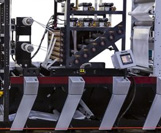
The Tamarack® MVW Inline RFID Inlay Insertion Equipment integrates into a flexo press to produce RFID labels, tickets, and tags in a single pass. The system is servo-driven and installed within the press line, supporting efficient production with both dry and wet inlay capabilities.
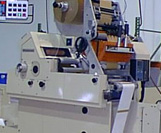
The Tamarack® MVW Offline RFID Inlay Insertion Equipment provides a standalone platform for inserting inlays into pre-printed materials. It includes re-registration capability to align inlays with print and supports multiple lanes for higher-volume production.
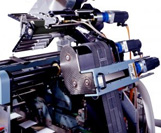
Tamarack® also offers RFID encoding through the Tamarack EZ RFID Encoder, enabling converters to integrate encoding and verification into production workflows.
By supporting accurate inlay placement and consistent label production, Tamarack equipment helps ensure RFID tags perform reliably in track-and-trace applications across retail, logistics, and regulated industries.
RFID requirements are being driven by a combination of retailer mandates, government programs, and industry-wide standards. As track-and-trace becomes a core requirement across supply chains, RFID is increasingly used to support visibility, accuracy, and compliance. For suppliers and manufacturers, understanding these requirements is essential for maintaining access to key markets and ensuring long-term operational success.
Tamarack® Products engineers precision RFID inlay insertion and encoding equipment for converters producing high-quality RFID labels, tags, and tickets. We provide inline and offline systems designed to support accurate inlay placement and reliable performance across track-and-trace applications. Contact us today to explore RFID solutions for track-and-trace RFID technology.