
The fast-paced environment of automotive production necessitates swift decision-making and precise inventory control. Many automotive manufacturers utilize RFID technology to minimize human error, expedite production cycles, and enhance traceability throughout product life cycles. Real-time data is indispensable in automotive supply chains, whether a top OEM or a tiered supplier.
According to an article published by RFID Journal, automotive manufacturers demand real-time visibility into their inventory, from parts delivery through to the final vehicle build. RFID in automotive production significantly enhances productivity and quality, while delivering many additional benefits.
Enhancing Visibility with RFID-Enabled Part Tracking
In automotive production, RFID tags are commonly applied to critical components, including engines, transmissions, seats, and electronics. Unlike barcodes, which require a clear line of sight and manual scanning, RFID enables automatic reading of many parts simultaneously without direct visibility.
This capability dramatically improves work-in-progress (WIP) tracking. Tag reads at each station signal when parts arrive and depart, reducing errors caused by manual scans or mismatches. RFID also ensures proper sequencing in just-in-time (JIT) workflows and supports variant configurations on mixed-model assembly lines. The result is higher inventory accuracy, faster part retrieval, and fewer assembly errors.
Product cycle times are the key driver of productivity in automotive manufacturing. RFID in automotive production can significantly enhance throughput and reduce labor costs.
RFID: Synchronizing Production Flow and Assembly Line Handoffs
RFID plays a crucial role in maintaining the synchronization of high-speed automotive assembly lines. By tagging components and subassemblies, each part automatically triggers a handoff when it reaches the next station on the production line. These automatic reads log real-time progress, flag delays or misroutes, and alert operators to component mismatches before they disrupt production. The result is fewer bottlenecks, shorter cycle times, and more predictable throughput across shifts.
Data captured from RFID-enabled handoffs is fed directly into Manufacturing Execution Systems (MES), enabling production teams to have dynamic control over each work cell. This level of real-time visibility enables engineers to balance workloads, reroute tasks, and maintain consistent takt times, which are crucial for keeping modern automotive operations on schedule.
Integrating RFID in Automotive MES and ERP Systems
RFID effectively bridges the physical and digital sides of automotive manufacturing. Automatic tag reads update order status, quality logs, and shipment staging instantly, eliminating the lag between a physical event and its digital record. Compared to barcode scanning, which depends on manual line-of-sight reads, RFID enables hands-free, high-speed data capture at multiple checkpoints simultaneously.
This continuous data stream minimizes rework by catching errors as they occur and allows rapid root-cause analysis when quality issues arise. By feeding RFID data into MES and ERP systems, manufacturers gain a quick and accurate view of production status, inventory levels, and outbound shipments, turning their assembly line into a tightly orchestrated, self-correcting system.
RFID Tag Quality Matters: Supporting Automotive Workflows with Reliable Inlay Integration
Automotive manufacturers rely on RFID for tracking and traceability as well as to maintain the quality, timing, and precision that their operations demand. From sequencing parts in real-time to feeding production data into MES systems, every scan must be accurate and consistent. That level of performance starts with reliable, high-quality RFID tags and labels.
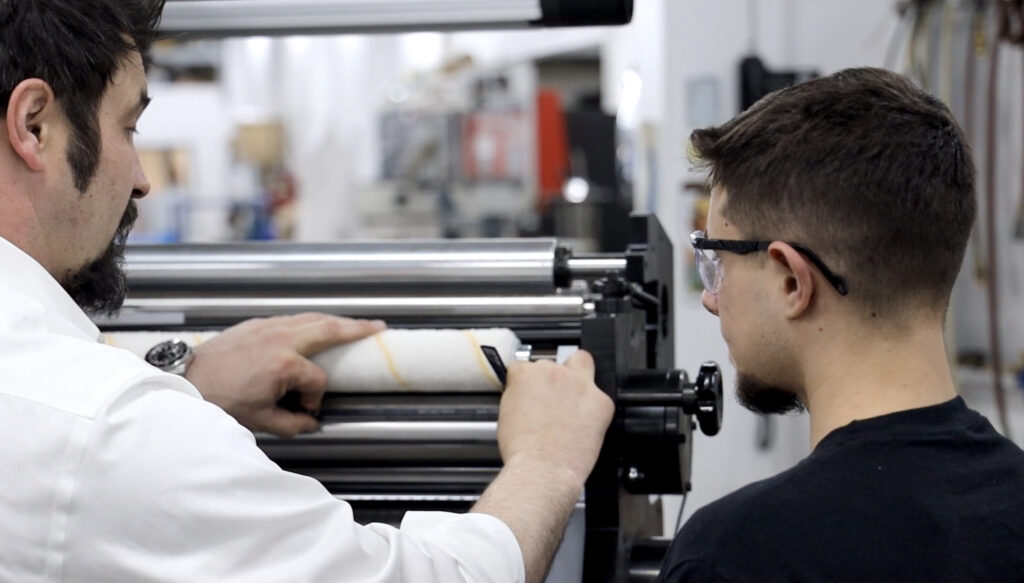
Manufacturers and OEMs depend on quality RFID tag producers and packaging partners to deliver products that meet strict industry standards. Inconsistent inlay placement, failed reads, or poor encoding can lead to costly disruptions on the line. That’s why RFID inlay insertion equipment must deliver precision at scale, whether for high-volume automotive part labeling or specialty sub-assembly packaging.
Tamarack supports both production models:
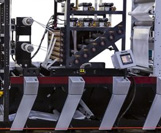
- Tamarack Inline RFID Insertion Equipment enables high-speed tag production integrated directly into press lines, with real-time encoding and verification built in.
- Tamarack MVW Offline RFID Inlay Insertion Equipment offers flexible, standalone RFID inlay application for preprinted webs and labels, supporting a wide range of formats and inlay types.
RFID as a Foundation for Smart Automotive Manufacturing
RFID technology plays a crucial role in modern automotive factories, enhancing visibility, traceability, and automation on the production floor. RFID technology enables manufacturers to achieve the efficiency necessary to remain competitive in the automotive supply chain.
Tamarack supports manufacturing operations with reliable RFID inlay insertion equipment, enabling the production of high-quality RFID tags, tickets, cards, and labels. Our RFID inlay insertion systems ensure high-quality tag performance that meets the demands of automotive workflows. Contact us to learn more about RFID inlay insertion equipment to realize the benefits of RFID in automotive production.